




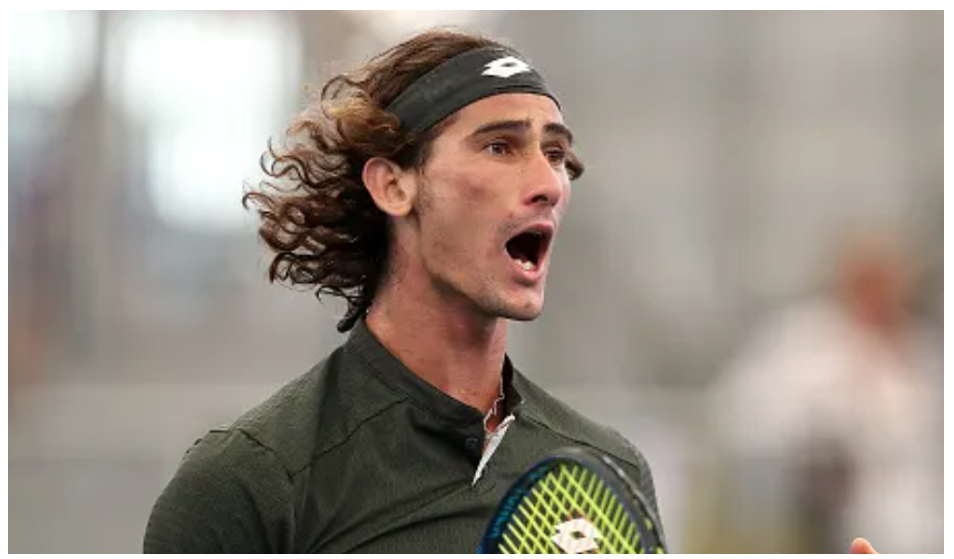

South Africa’s Lloyd Harris heads into the French Open with a familiar question hanging over him: Can a player built around first-strike tennis make Paris more than just a brief stopover? Throughout his career, Harris has looked more like a grass-and-hard-court threat than a clay-court disrupter.
Yet, in the 2026 Roland-Garros swing, there’s real cause for belief that a “breakthrough” run is at least plausible, however frustrating hurdles of draw, his body and the very nature of the surface prove to be.
Where does Harris stand at this stage?
Harris is doing everything to re-establish his ranking base through the Challenger circuit and some selected tour-level opportunities. As per official ranking breakdowns, he is in the mid-150s after a solid showing at the Challenger events (including Soma Bay and Tenerife) earlier in the year. The significance of these achievements lies in two aspects: they are helpful in lifting him into direct-entry territory for major events, as well as providing him with match volume which is the currency players need most after injury disruptions.
That disruption has been a recurring theme in recent times. Harris has spoken about the grind of coming back from back surgery and the day-to-day uncertainty it can bring. In men’s tennis, where physical shortfalls are rapidly punished, those who are merely “available” can be a competitive advantage, but not if the body doesn’t hold up over the long European spring.
The Paris problem: history and match-up
Roland-Garros has never been Harris’ happiest hunting ground and those wagering on tennis will be aware of that. His French Open record is a ceiling of the second round, which he has briefly reached without advancing beyond. The past sets a framework and not a limitation in the hope of a Paris breakthrough. In order for that to happen, he would have to do something he has never done on that stage. He will be forced to take down at least one player good enough, or clay-comfortable enough to drag him into deeper rallies and heavier patterns.
Clay raises big questions of a big server. Points reset. Returns come back with interest. Movement and patience are tested and the match can be a battle of small grinding negotiations rather than a quick referendum on serve-plus-one.
In spite of all that, Harris has demonstrated that he can play the pressure points of the event. In 2025, he took part in qualifying, defeating Marin Cilic in the process, and he then met Andrey Rublev. That kind of week, gaining confidence through the matches, and then testing himself against elite pace is often the blueprint for players trying to level up at majors.
Why a breakthrough is not a fantasy
A “breakthrough” at the French Open need not entail a semi-final. As for Harris, to make it to the third round in Paris would mean something to him and the ingredients are there.
First, his serve still remains a real weapon and can occasionally keep him out of trouble long enough to steal a set or flip a tie-break. Furthermore, the recent success of the challenger suggests a return to competitive rhythm. When players try to preserve a tenuous lead, many of them change their swings on big points even without being consciously aware of it.
There is the simple fact that men’s draws open up. Seeds fall. Weather slows courts. A player who has good service, health, and times his aggression suddenly finds himself with a lane.
What must be changed on clay?
For Harris to make inroads at Roland-Garros, there are three improvements that are imperative and non-negotiable.
I. Return pressure has to rise. On clay, breaks are the true scorecard. If he is just hanging on serve, and hoping, it’s living on the edge.
II. Tolerance for rallies needs to improve. He doesn’t need to become a grinder, but he needs to be able to stay in points for long enough to get the right ball to finish.
III. Physical durability must be reliable. Five-set tennis in Paris can be a slow burner. After back issues, the margin for error is thinner, and between rounds recovery is a part of the match plan.
So, can Harris break through in 2026?
Certainly, but there are conditions. If Harris comes healthy, brings his early-2026 form to the European clay and draws a first-round match that doesn’t include elite return players and indomitable clay specialists in round one and two, a first Paris third round is secured.
Harris can certainly make the French Open third round if he comes in healthy. If he takes performances from early 2026 into the European clay season and he has a draw which avoids elite returners and unrelenting clay wizards in round one and two. His recent performance shows form, his French Open history shows the bar he needs to clear.
In other words, the breakthrough is possible but in Paris, possibility is always provisional.